Growing Up Mischievous
I was born in Shanghai, China. 2002. My maternal grandmother was a doctor practicing internal medicine. I grew up weak-bodied and had pneumonia twice. When mucus overaccumulated, metal tubes forced themselves into a frightened, well-behaved boy in an operating room of silver and white. My grandmother overprotected me, her father and uncle had died of tuberculosis after all. When I would later attend international school for fourth and fifth grade, I daily observed my mortal enemy from afar. Pockets of dark, dense smog rose from bleak factories as my bus drove on the hundred-foot-tall interstate into the city.
Have I sadfished you? Baited! Despite the overprotection, I was wicked! Conor Mcgregor must’ve copied my childhood strut. I was Boy-Scout-Russelling all these adults out here
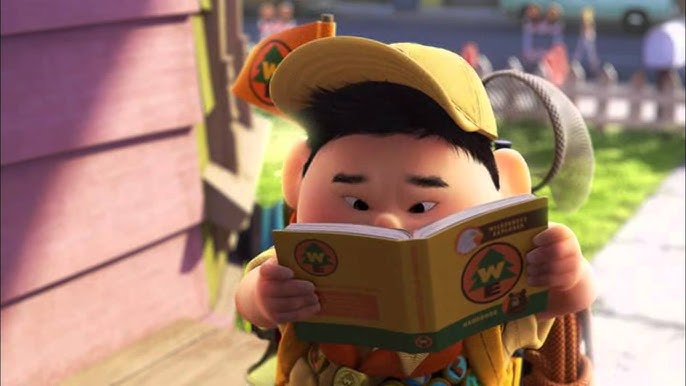
with a Chinese riddle booklet in hand and a silly cap on head, I quizzed down the adults I met. I had the best grades but was disruptive enough to be kicked out of the classroom. Peeking through the warped windows, I kept making silly faces at my friends much to the groan of my teachers. I also believed through proper breathing, one can obtain superpowers through instanteous transfer of energy from the Dan Tian mid section. That’s what they wrote in the WuXia novels, so, sometimes I was caught medidating (and I had to play stupid because that’s what the main characters with special talent had to do to avoid earlh ).
Once, my school hosted a storytelling competition. We were supposed to prepare a story to deliver in class, the winner of each class tells it in front of the whole school. I forgot to prepare. My greatest improvisation ensued: In my story, I would fall into a pig pen and get out of it bullfighter style. I got to the school competition by unanimous vote. That day, I danced like a bullfighter with my dad’s red windbreaker as I delivered the story crisply. In that sauce red auditorium, I caught my crush’s gaze somewhere from the upper left corner as my friends were keeling over with laughter a few rows down. She was sitting at the edge of her seat, staring at me brightly. So I peacocked.
For my mischief, my mother sent me to military training for a summer, much to my grandmother’s objection. At the camp, everyone had to memorize the entirety of San Zi Jing, a Confucian classic. I still caused trouble and subjected my dorm of eight-year-olds to hold planks for an hour during post-lunch nap time. I came back from the camp propagandized and enlightened. I only walked in military steps around the house for a few months and begged my grandmother to let me wash her feet, citing Confucian ideals.
But my mischief went on. All the adults talked about the same stuff. I was so bored of it, and I decided their time could be better spent participating in my games. From reading a crap ton—I stayed up until 4am some nights to read and even wrote some Wuxia chapters with a flashlight under the blanket—I smuggled in a serious vocabulary that I would use to terrorize the adults. For the Chinese language, this means you know a lot of four-word idioms. Everyone knows a few hundred idioms and poetry stanzas from Chinese classes, but they don’t use them much in the vernacular. Instead of saying something is shocking, you could say that something “splits the stone and startles the heavens” (石破天惊). I dragged adults into unskippable games of connect-the-idioms: I say an idiom, you say an idiom whose first letter starts with my last, and so on.
I never beat the taxi drivers though. Not even when I am all grown. Last year when I visited, I played it with a taxi driver. Soon enough, he started skipping my turns, riffing off of his idioms, then barrelling into poetry lines and pop song lyrics, all while navigating busy Shanghai streets under the downpour.